05 November 2026
Choosing Edge Banding for Painted MDF and Faced Boards
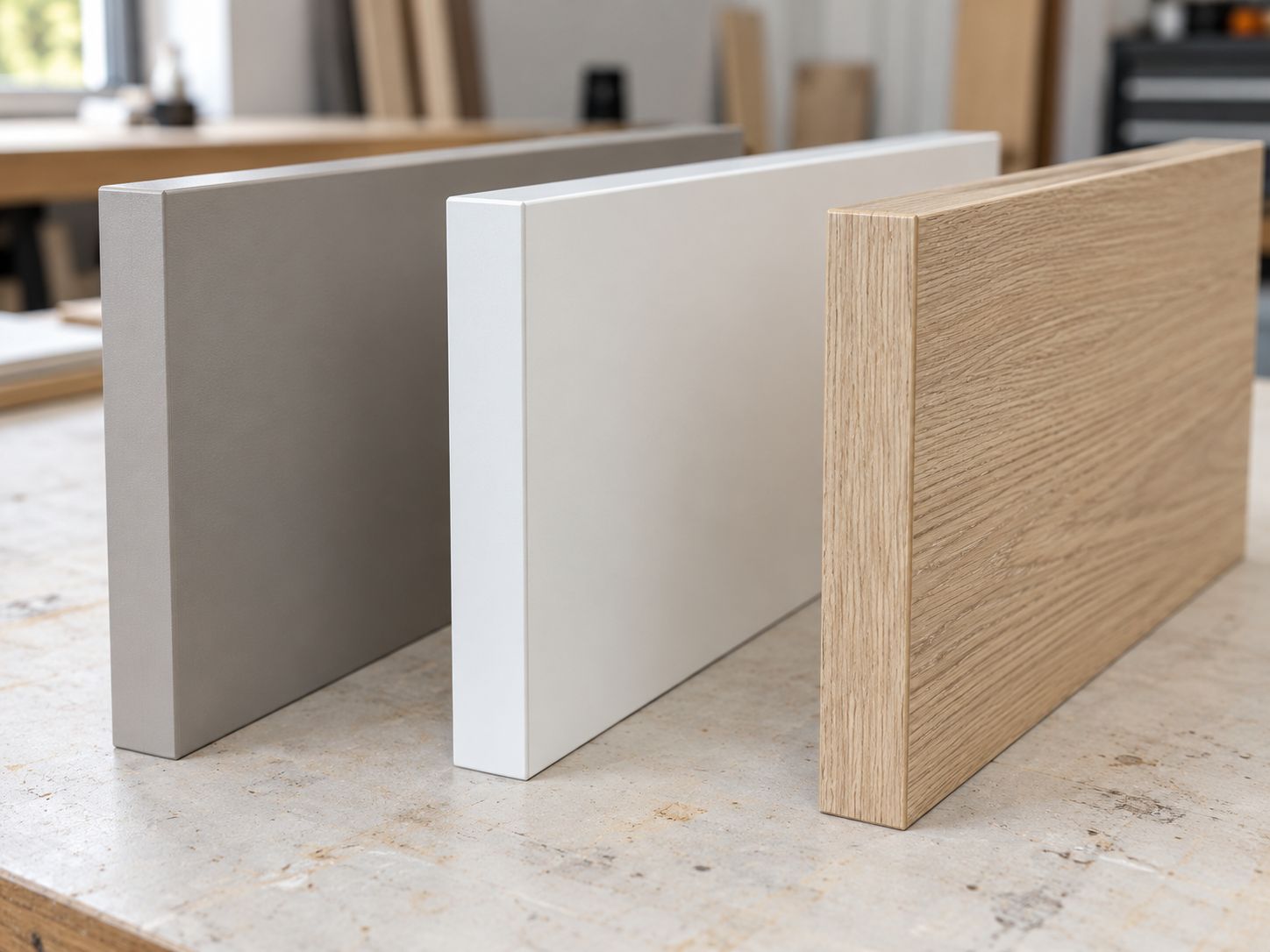
Choosing Edge Banding for Painted MDF and Faced Boards
A painted cabinet door and a factory-faced shelf may both have an MDF core, but they need different edge decisions. On the door, you may want the face and edge to read as one painted surface. On the shelf, you may want to continue an existing decorative finish. Choosing edge banding for painted MDF and faced boards starts with that distinction, before choosing a tape or asking for a price.
For joiners and cabinet makers, a useful brief explains what the edge should look like, which parts remain exposed and how the piece will be used. The six cases below help you decide what to discuss with the workshop. Use them to narrow the choices and explain the result you want before the workshop confirms a suitable specification.
Start with the finished panel, not the tape
Identify the board product and the intended finish on its broad faces. Then look at the edge in the assembled cabinet: will it disappear against another component, be visible when a door opens, or form a prominent shelf front? Our overview of professional edge banding introduces the wider service. Here, the task is choosing the treatment for a particular component.
An edge that needs finishing does not automatically need a separate band. Painted MDF should be assessed for the appropriate preparation and finishing route; do not specify banding solely because the core is MDF.
Six edge decisions to make before ordering
A plain MDF door that will be painted
Describe the intended painted appearance, including whether the edge is square or shaped. Ask the finisher whether the proposed board and edge detail can be prepared and coated directly, or whether a compatible paintable edging would suit the job. Banding is one possible route, not a compulsory stage for every painted MDF component.
For example, a flat wardrobe door needs a different assessment from a moulded detail. If paintable edging is proposed, ask the workshop to confirm compatibility with its coating system and show how the face-to-edge transition will be finished. Do not assume a decorative edging product will accept the same paint.
A shelf with a factory-finished face
Supply the board manufacturer and product or decor reference, plus the thickness and surface finish. A description such as “white board” leaves too much undecided. Decide whether the visible shelf edge should coordinate with the face or deliberately contrast with it.
Compare a physical face-and-edge combination for colour, texture and sheen. A similar colour name is not enough to judge the assembled result. Manufacturers distinguish these characteristics in their ranges; EGGER’s edging guidance, for example, describes matching across decor, texture and gloss.
A wood-effect face with a visible front edge
Decide how the pattern should meet the front and ends of the panel. A wood-effect decorative surface and a natural veneer are different materials, so identify which one you have rather than asking simply for a “wood edge”.
For an open bookcase, look at the shelf front and side together. Ask to see the proposed edge against the actual board, including a corner if available. Confirm whether a coordinated pattern, a contrast or another assessed treatment best expresses the design. Availability and suitability need confirmation before specifying a particular material.
An edge visible only when the cabinet opens
A closed-door view can conceal edges that become obvious in use. Check shelf fronts, door returns and any exposed ends from the normal viewing positions. Mark which should match the exterior, which should match the interior, and which require a different agreed treatment.
Do not label every edge “hidden” because it is behind a door. Equally, do not assume every concealed joint needs the same decorative band as a visible front. Ask the workshop to review the construction detail and agree the treatment for each situation.
A frequently handled or splash-exposed edge
Explain where the component will sit and what it will encounter. A desk front, utility shelf and cabinet beside a sink give the workshop different questions to assess. Include likely knocks, cleaning routines and exposure to moisture or heat where relevant.
Choose the whole board-and-edge arrangement for those conditions rather than treating banding as a waterproofing guarantee. Ask which limitations and care instructions apply to the proposed combination. A thicker-looking edge or an apparently invisible joint is not, by itself, evidence of a particular performance rating.
An edge detail that affects the final fit
Once a treatment is proposed, confirm its effect on the finished component size and appearance. Agree who allows for the edging in the dimensions before cutting starts. Do not make a standard deduction or assume a quoted board size includes the finished edge.
Keep the selection decision separate from the parts schedule: first agree the edge treatment, then record it consistently for production. The guide to panel cutting for bespoke projects explains the connection between cutting and later finishing. A change to the edge specification should trigger a check of the affected dimensions.
Send the decision the workshop needs to assess
A useful enquiry might say: “These shelves have a factory-faced board in the attached product reference. The front edge is visible, and we want it to coordinate with the face. Please assess a suitable edge treatment and confirm the finished-size convention.” For painted MDF, replace the decorative-match request with the intended paint finish and edge detail. These are illustrative briefs, not approved production specifications.
Spraybox provides edge banding, panel cutting and spray finishing. Email the team your board details and intended edge appearance so the material, finish and project requirements can be assessed together before you commit to an order.